
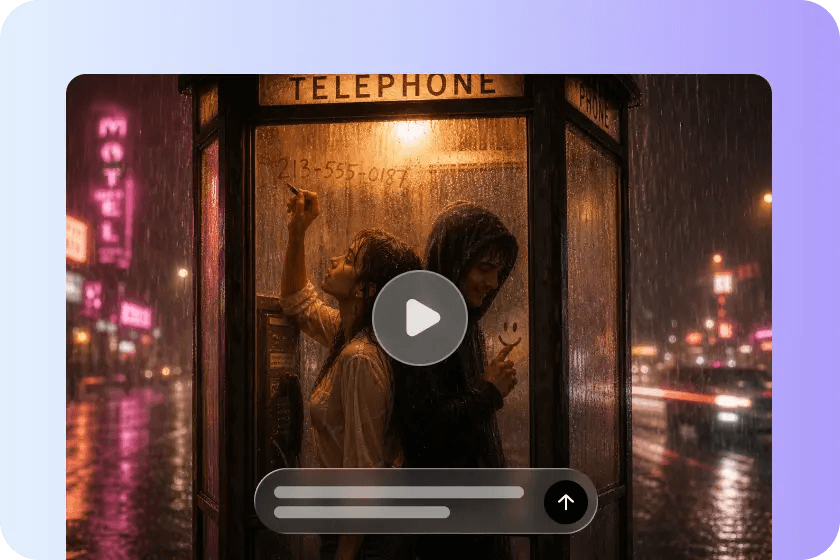
Background replacement is a great way to allow filmmakers more control over locations without the need to set up every scene physically. This can be achieved using traditional green screen techniques, which involve careful colour matching, or with AI background removal technology that automatically extracts subjects from their backgrounds. AI-powered movie creation and editing functionalities for flexible visual production, Pippit. This workflow may be useful for social videos, short films, promotional content, and even post-production projects where altering the environment can help to enhance the final visual result.
Green Screen and AI Background Replacement Explained
The traditional way of green screen compositing is to have a subject in front of a colored background and then use the chroma key to remove the chosen color. The transparent area can then allow another image or video layer to be seen underneath it. AI background removal employs a distinct approach, leveraging visual cues to distinguish between the foreground and the background. This can allow background replacement to be possible when the footage has enough separation of the subject without a green screen. Hair, clothing edges, hands, props, and moving objects can still be problematic boundaries. AI movie workflows can effectively move locations, atmospheres, and visual contexts, such as a studio scene to a city street or the distance landscape. The replacement should match the brightness, colour temperature, perspective, and image quality of the subject to achieve a natural look. The Pippit can be used for background editing as well as for the creation and refinement of movies.
Preparing Footage for a Convincing Background Replacement
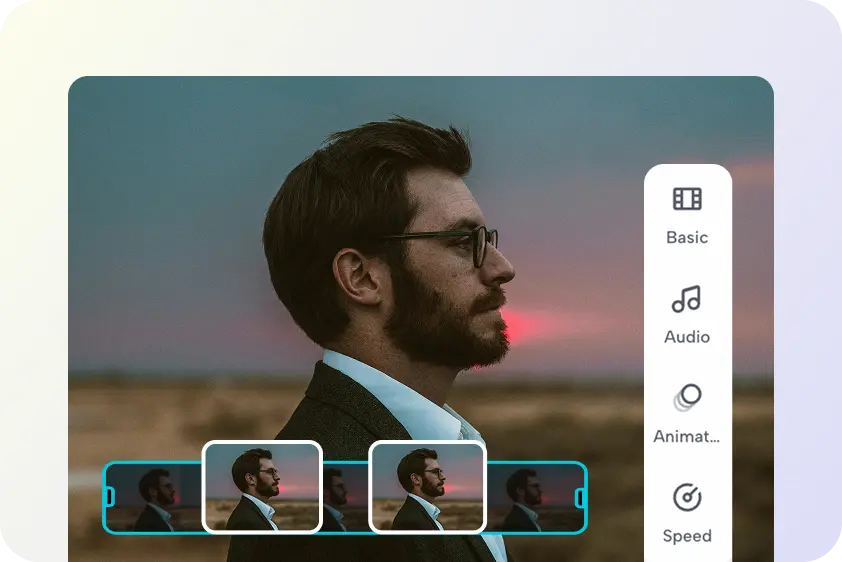
AI background replacement works best when the source footage is of high quality and easy to identify. Choose scenes in which the subject is clearly visible against other elements; this separation of the foreground is crucial to the editing system for determining important edges. The lighting direction is also crucial, as the replacement background should be lit using the same logic. When the new environment implies a different direction of light, shadows will start to show any inconsistencies quickly. The perspective of the camera, its height, and direction of view should also correspond to the chosen background. Any subject movement should be consistent between frames, particularly with regard to quick gestures or changes of position. Ensure that all essential information is clearly visible and avoid settings where there is a lot of overlap with hair, clothing, props, or thin objects. Early planning of the intended environment can minimize revision and assist in creating the desired environment, mood, and continuity. Pippit enables creators to build scenes with these story studio needs in mind. The background elements should not dominate the foreground subject, and the relative scale should also remain realistic.
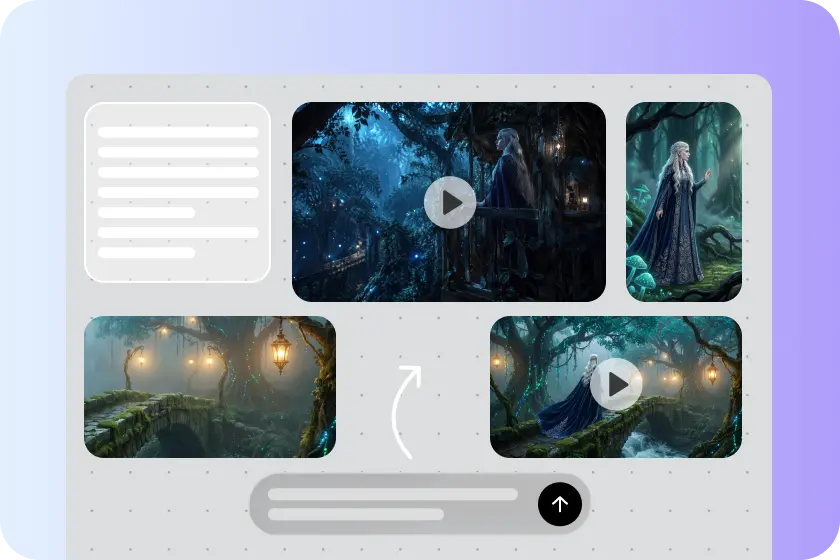
Steps to Generate Green Screen Replacements via AI Movie Background Technology
Step 1: Set up your background replacement project
- Sign up for Pippit using your Google, TikTok, or Facebook account information.
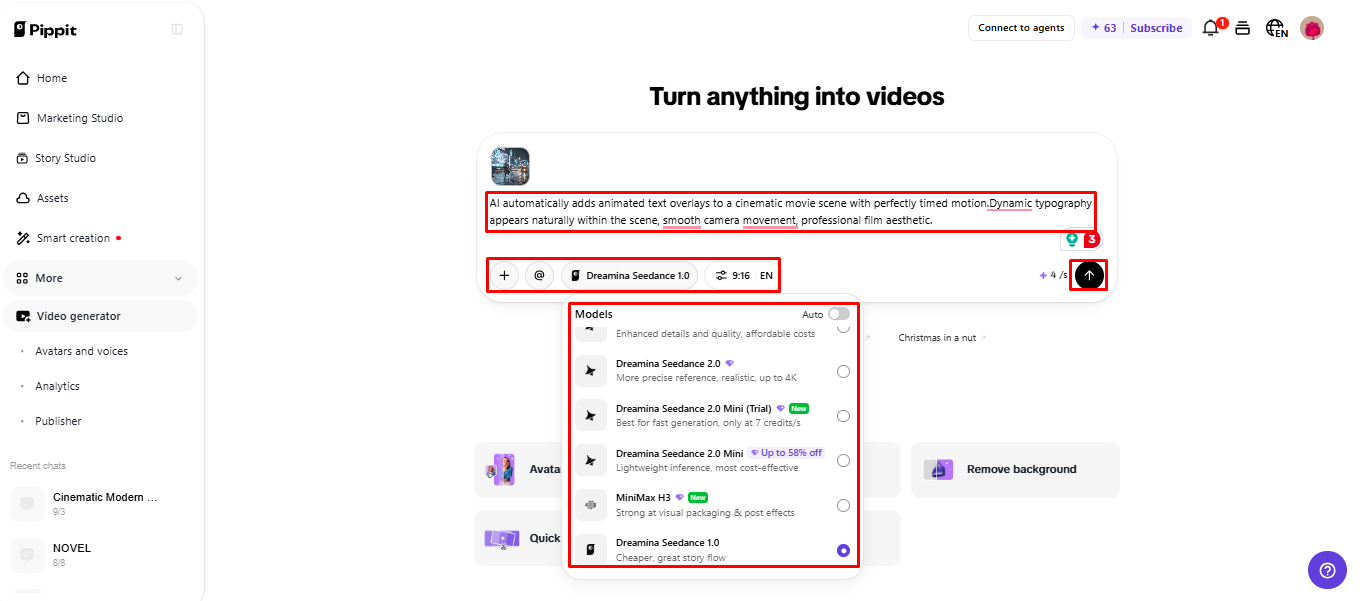
- Navigate to the "More" tab on the left vertical menu bar and click it to access "Video generator".
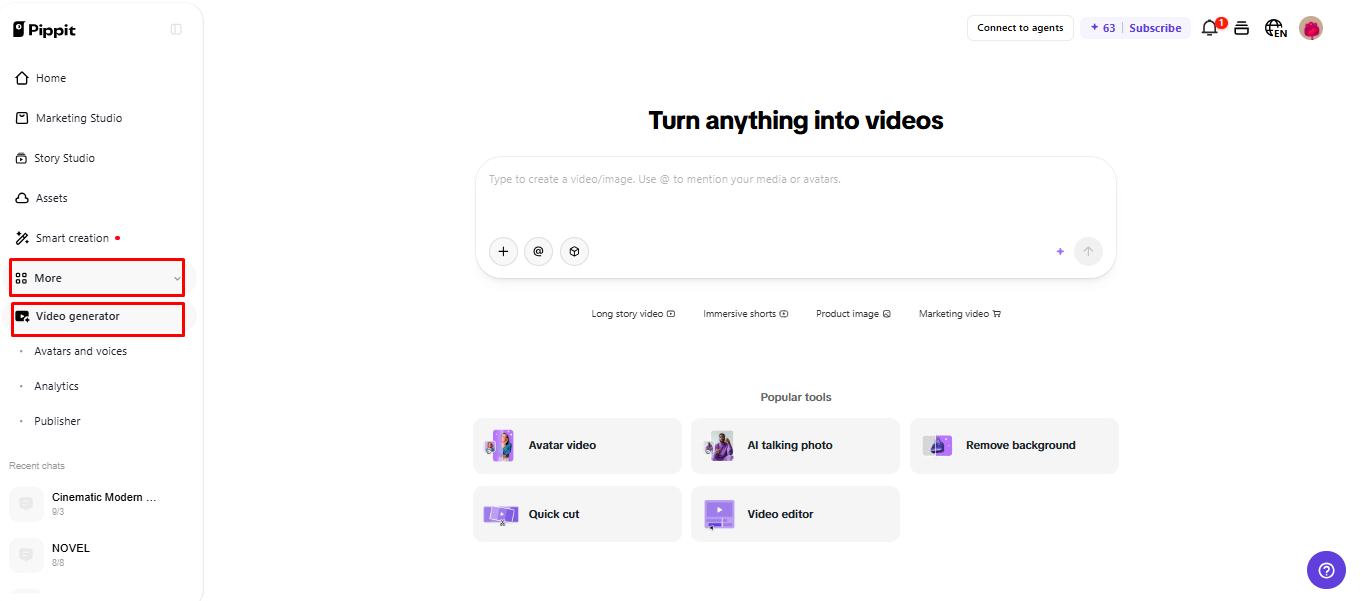
- Select an AI model, such as Dreamina Seedance 1.0, Dreamina Seedance 2.0, Dreamina Seedance 2.0 Fast, Dreamina Seedance 2.0 Mini, or Dreamina Seedance 2.5 for your movie generation.
- Enter a detailed text prompt describing the movie and the background you want to create or replace. Add character details, environments, formats, effects, and camera angles.
- If needed, select the video length, language, subtitles, and aspect ratio for your movie.
- Click "+" to upload reference images or videos from your device, phone, Dropbox, or a link. You can also select assets if you do not have reference media.
- Once your project settings are ready, click "Generate".
Step 2: Generate scenes with AI-powered backgrounds
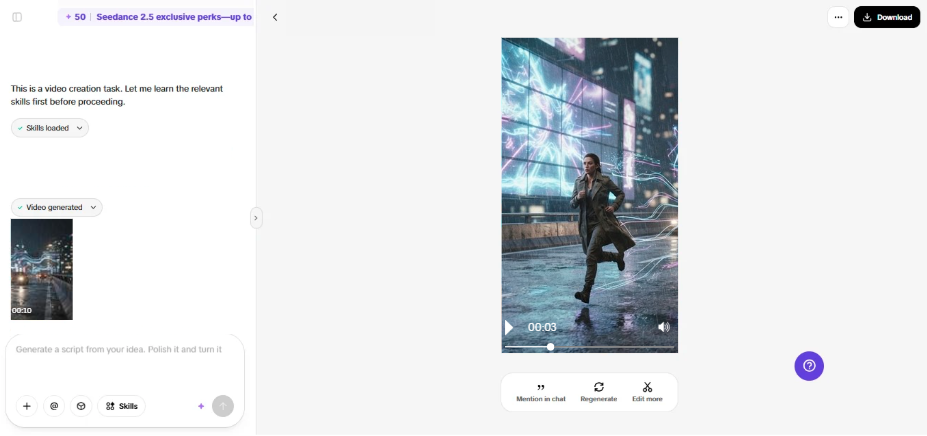
- After clicking "Generate", Pippit's AI video generator automatically creates a movie based on your text prompt and reference media.
- The AI handles editing elements such as transitions, pacing, captions, avatars, voice, lyrics, and visual enhancements while supporting creative background changes.
- You will receive a movie draft to review and check how the characters and scenes work with the generated or replaced backgrounds.
Step 3: Fine-tune the background and export
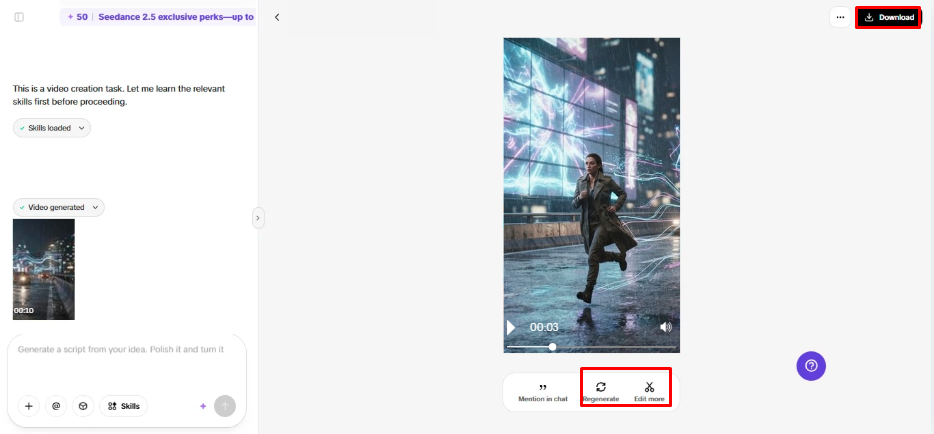
- Click the "Download" tab in the top-right corner to save the movie to your local device. If you do not like the generated result, click "Regenerate". To make further changes, click "Edit more" right under the video to open the Pippit editing interface.
- Customize the movie by editing captions manually, adding text, and adjusting the size, color, alignment, filters, and effects.
- You can also add background music, remove backgrounds, and fine-tune the visuals to create more convincing background replacements.
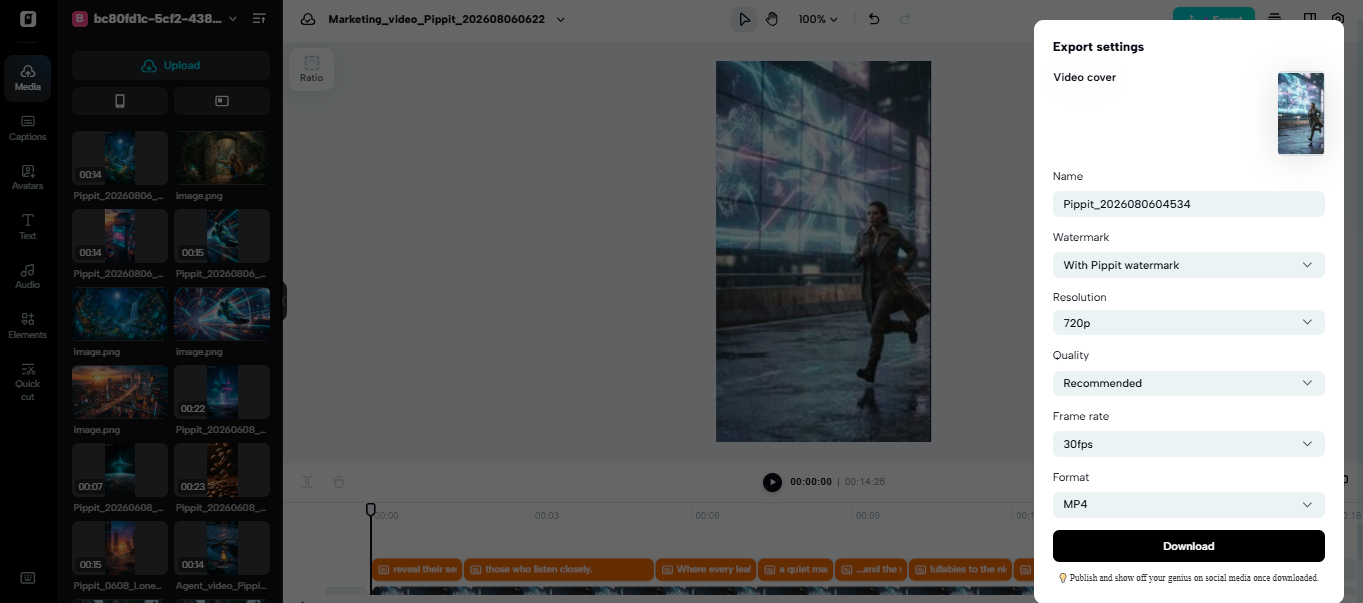
- When your movie is ready, click "Export" in the top-right corner.
- Select "Publish" to post directly to TikTok, Instagram, or Facebook, or click "Download" to save the movie with your preferred format, resolution, frame rate, and quality.
Principles for Natural-Looking AI Background Compositing
There are several guidelines to help keep visual consistency when replacing backgrounds. Ensure that the lighting direction in the foreground matches the replacement environment, and maintain a camera perspective and angle that remains compatible between both the visual layers. The relative scale should be realistic and appropriate; blur and depth effects can be used to enhance the illusion of distance. Check hair, clothing, hands, and moving edges for separation artifacts, and leave natural shadows as much as possible. The chosen environment should also be complemented by colour temperature, contrast, and atmospheric effects. Check the separation quality; it can be different depending on the frame. Using a uniform visual style throughout the adjacent shots and transitions can help the movie to seem more cohesive. Pippit can also facilitate promotional editing, in which backgrounds emphasize campaign themes. While having consistent locations and visual branding can be advantageous to an ad maker workflow, the replacement should complement the message, not detract from it.

Common AI Background Replacement Problems to Check
Check the entire sequence for artifacts before deciding to replace it. When there are still traces of the original background around the edges of foregrounded objects, such as hair and detailed clothing, halos can occur. Unwanted areas can also survive around transparent objects, hands, or fast-moving objects. Pay attention to gestures and thin objects in a moving subject, as separation between frames may be inconsistent. When the environment around an object changes, shadows can become unrealistic, especially if the surrounding environment implies a different light source for the object. Perspective issues can cause the subject to seem disassociative, and size and scale can cause people or objects to appear too large. Also, blurs can reveal a sharp object with a very soft background. Look at the whole movie, not just one frame, to determine if it needs replacing. Pippit editing tools could be used to perfect captions, effects, audio, filters, etc., etc., etc. Re-check transitions - background changes can affect the continuity between shots, and export only when replacements are stable in the sequence.
Improving Background Replacement for Different Movie Scenes
Background replacement will vary depending on the scenes. If the scene is a dialogue scene, it might be better to shoot in a controlled environment with consistent lighting and minimal movement. In contrast, an action beat might demand a closer look at separating the subjects on a frame-by-frame basis. Outdoor scenes should have depth, shadow, and natural perspective; the replacement should not appear artificially layered. In promotional scenes, the focus might be on maintaining brand consistency, whereas short-form social media content might prioritize quick impact and visual appeal. Using backgrounds as per the objective of each scene can minimise unwanted cuts and continuity issues. Planned camera angles and visual direction can also help to ensure a cohesive look throughout the film, with reference images helping to keep the vision of the finished product in mind.
Conclusion
AI background technology provides a wider range of location options, allowing for the creation of a variety of settings without having to build them all physically. It can be used for controlled scenes, creative experiments, promotional projects, and efficient post-production workflows. Pippit brings movie generation and editing capabilities together in a single easy-to-use creative suite. Even with good results, proper footage, visual matching, and detailed examination are still required. Set up each shot carefully, select appropriate settings, and look at each changeover throughout the entire sequence. These practices can make AI background editing a viable part of contemporary film production.